
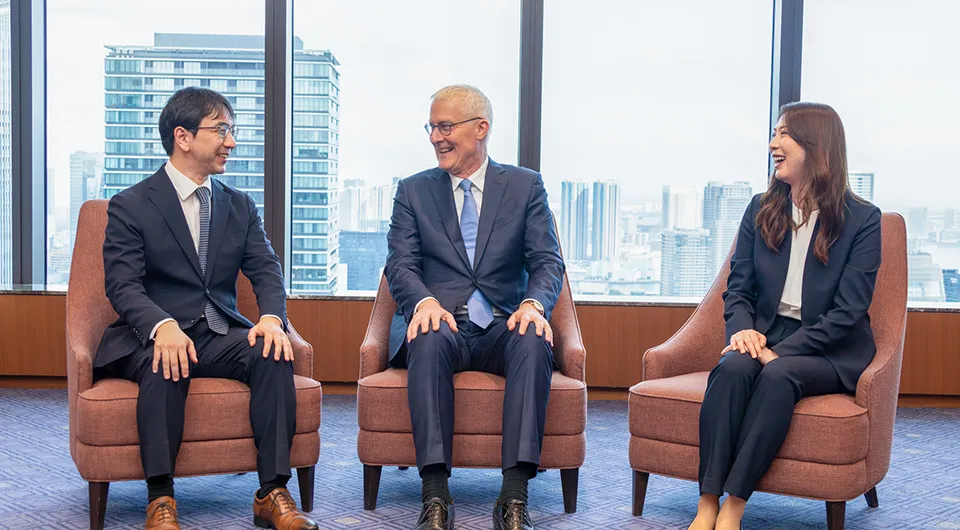
Toward the realization of INPEX Vision 2035, outside director and employees engaged in dialogue to exchange views on how diversity and inclusion contribute to corporate growth by creating positive, reinforcing cycles.
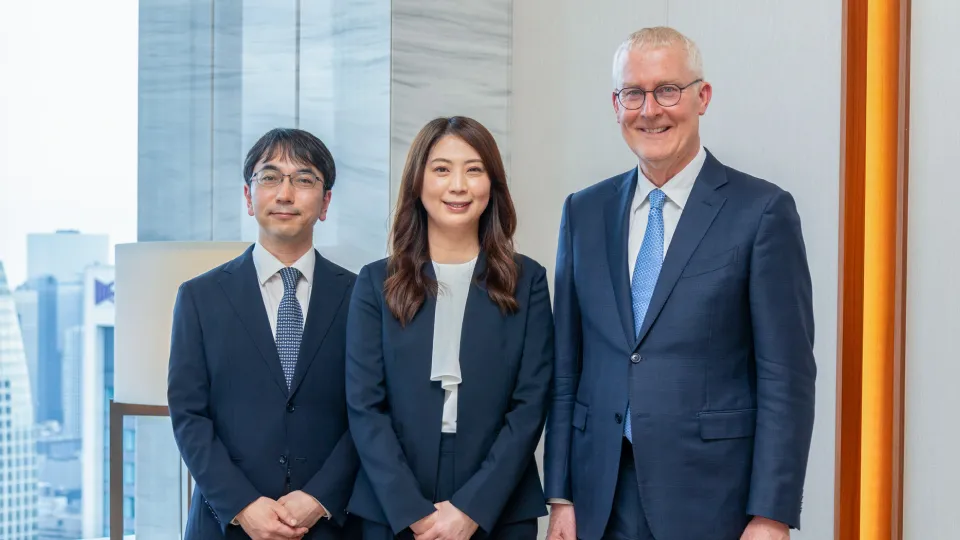
Members

Corporate Strategy & Planning Unit
Last year, we unveiled INPEX Vision 2035: Realizing a Responsible Energy Transition, marking an important first step toward the future we aspire to achieve over the coming decade. At the same time, uncertainty in the global landscape has continued to intensify over the past year.
Against this backdrop, today I would like to explore how Diversity and Inclusion contribute to corporate growth by creating positive and reinforcing cycles, and to deepen our understanding of the role that DE&I—Diversity, Equity, and Inclusion—plays in realizing our Vision. I hope to do so through the valuable insights and perspectives shared by our two distinguished speakers.
To begin, may I ask each of you to briefly share your roles at INPEX?
I was appointed as an Outside Director at the General Meeting of Shareholders held in March 2025, about one year ago. While I am still relatively new in my role as a director, I have, in fact, had several opportunities to engage with the Company in the past, including through my service as the Ambassador of Australia to Japan.
After obtaining my qualification as a lawyer, I worked for approximately ten years at law firms in Japan and overseas. In 2018, I joined INPEX as an in-house legal counsel, and was subsequently seconded to INPEX Idemitsu Norge AS, our Norwegian subsidiary, where I served as General Counsel for three years. I returned to Japan in 2025 and currently serve as Manager of the Domestic Group within the Legal Unit.
Thank you very much for your self-introductions.
I joined the Company as a mid-career professional in 2006 and have developed extensive experience across accounting, taxation and finance.
In 2018, I was assigned to Perth, Australia, where I spent approximately seven years contributing to major strategic initiatives, including the Ichthys LNG Project and renewable energy businesses in Australia.
After returning to the Corporate Planning Unit in 2025, I am currently engaged in work from a company-wide, strategic perspective.
As uncertainty continues to increase, organizations require a diversity of perspectives more than ever.
My impression is that INPEX has a significant number of employees who have joined the Company mid-career, such as the two of you. As for myself, I began my career as a new graduate at the Australian Department of Foreign Affairs and Trade. While I have become lifelong colleagues with my fellow new graduate hires, my mid-career peers brought fresh perspectives that proved to be highly valuable.
I believe that combining the perspectives of those who join straight out of university with those of mid-career professionals is essential for effective organizational management. With that in mind, could you tell us what kind of members make up the Legal Unit?
Approximately 80 percent of the members of the Legal Unit come from law firm backgrounds, and more than half are non-Japanese nationals, making it a department characterized by a high degree of internationality and diversity. As the Company is engaged in numerous overseas projects, having team members who can handle a wide range of jurisdictions enables us to provide comprehensive, one-stop legal support.
The Legal Unit is often regarded as one of the most culturally diverse departments within INPEX headquarters. As Mr. Miller rightly pointed out, the Company has a relatively large number of mid-career hires with diverse backgrounds and experience, which I believe is a significant strength.
I think this represents a significant strength for the Company. May I ask how effectively new graduate employees and mid-career hires are working together?
Historically, our Company has consisted of employees from four different predecessor organizations—INPEX Corporation, Japan Oil Development Co., Ltd., the Japan National Oil Corporation, and Teikoku Oil Co., Ltd. In addition, around the time of the final investment decision for the Ichthys LNG Project, we actively recruited a large number of mid-career professionals in both Japan and Australia as we continued to shape and strengthen the organization.
Against this background, I believe we have developed an organization in which there is little distinction between employees who joined as new graduates and those who joined mid-career.
Organizational integration can sometimes give rise to internal divisions or silos, but it is equally important to focus on its positive effects. The term "diversity" encompasses a wide range of dimensions, including gender, sexual minorities, background, and professional expertise. Essentially, it signals that individuals have different perspectives and ways of seeing the world.
Earlier, we touched on the increasing level of uncertainty we face today. Until now, we have largely taken for granted that we live within an international rule-based order. However, as geopolitical risks continue to rise, we are increasingly confronted with a world in which unexpected events occur on a routine basis, and where society does not necessarily progress in line with our implicit assumptions.
Organizations rich in diversity may carry a risk of reduced cohesion. However, more importantly, such organizations also create far greater opportunities to view issues from multiple angles and to approach challenges with an open mind.
Many working professionals in Japan may start their day by reading a Japanese financial newspaper, which naturally shapes how they view the world. There is value, however, in having those who read Western business newspapers, or who actively gather information from media in other countries. I believe that having people within a team who observe, think, and evaluate issues from different perspectives is essential for effective business execution and sound decision-making, particularly in an era of rapid and profound change.
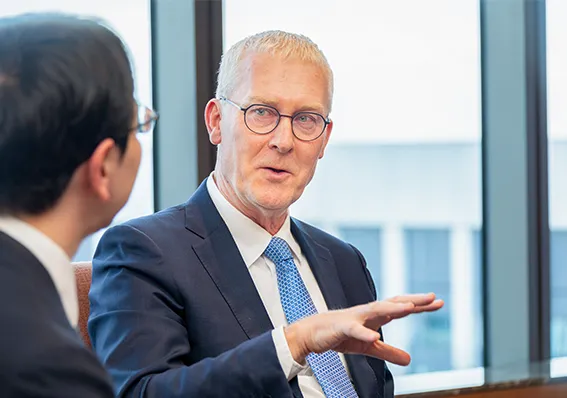
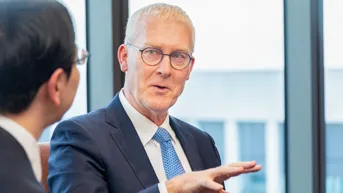
Thank you very much for sharing your insights. Although we have just begun our discussion, it feels as though we may have already drawn a conclusion. (laughs)
INPEX's culture and distinctive characteristics; diversity and leadership
I would like to change the subject a little. Approximately 70 percent of the Company's profits are generated by the Ichthys LNG Project. Since the time of the final investment decision in 2012, the Ichthys LNG Project has taken a progressive approach to social engagement and investment with the Larrakia people, the Traditional Owners of the Darwin region, as well as with other local communities. In this context, we have also established a reconciliation action plan, or RAP, to guide our efforts in working collaboratively with Indigenous communities.
At the same time, our Australian subsidiary employs people with a wide range of professional expertise and diverse career backgrounds. Within the local management team, there are only a small number of Japanese expatriates, and project operations are carried out daily by a truly diverse organization.
Mr. Miller, I understand that you were involved with INPEX even prior to your appointment as an Outside Director. What impression did you have of the Company at that time? Additionally, in Australia, where you currently reside, how is INPEX generally perceived as a company?
To be candid, at the outset, I did not have particularly high expectations regarding INPEX's approach to social engagement and investment. When I assumed my role as Australian Ambassador to Japan in August 2011 and met with INPEX's management team—on the eve of the final investment decision on the Ichthys LNG Project—I was introduced to the Company's efforts to engage with the Larrakia people and other stakeholders.
At that time, I recall wondering whether a Japanese company could truly engage in meaningful dialogue with Indigenous communities—something that even Australian companies were not always doing satisfactorily.
Subsequently, in 2014, at the Japan-Australia Joint Business Conference held in Darwin, I had the opportunity to hear firsthand from then Chairman Kuroda and then President Kitamura about the progress that had been made. It was at that point that I revised my initial assessment.
Today, I believe INPEX is viewed very positively in both the Northern Territory and the city of Darwin. Although Darwin has a population of fewer than 200,000, I think it is fair to say that INPEX is widely recognized there—from the Chief Minister of the Northern Territory to the broader community.
Turning to your second question, in Australia, Japan is often most strongly associated with automobile manufacturers, and INPEX does not yet have the same level of name recognition. However, I do believe INPEX is a company that is recognized, and among those who are familiar with it, its reputation is a very positive one. There may be room to further strengthen INPEX's branding in Australia, but given that the Company was virtually unknown at the time of the Ichthys final investment decision some 15 years ago, I am confident that recognition will continue to grow over time.
I would also like to ask you, Ms. Kanayama. Earlier, you shared that the Legal Unit is highly multinational and diverse. The Legal Unit at INPEX upholds "One Legal" as its guiding principle. Could you tell us what mindset you and your team bring to your work on a day-to-day basis in putting this principle into practice?
In addition to being multinational, the Legal Unit is composed of in-house lawyers with a wide range of expertise, including M&A, dispute resolution, finance and EPC (engineering, procurement and construction). This diversity of professional specialization enables us to effectively address complex and highly sophisticated issues.
Because our team brings together members with varied backgrounds, we can complement one another's knowledge and experience. This naturally gives rise to active and constructive discussions, which in turn lead to new ideas and the identification of emerging issues.
Energy development projects are characterized by highly complex contractual structures and the involvement of a wide range of stakeholders, and therefore often cannot be resolved through a single, straightforward legal interpretation. In such circumstances, I strongly feel that having diverse members engage in discussion from multiple perspectives allows us to develop a broader range of viable solutions.
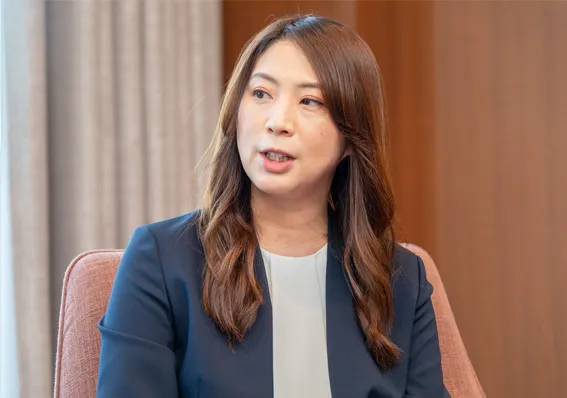

So, would it be fair to say that having diversity in terms of nationality, areas of expertise and law firm backgrounds enables the team to consider issues from multiple perspectives and provide management and various business units with proactive, strategic advice as well as risk-mitigating guidance?
Yes, I agree. For the Legal Unit, having a strong business perspective is essential to providing appropriate and effective legal advice, as is the ability to clearly understand the needs of management and individual business units.
Earlier, we touched on the distinction between new graduate hires and mid-career professionals. Within the Legal Unit, we also have members who have transferred from business divisions such as Project Development and Marketing. By bringing with them insights and perspectives gained through hands-on experience on front lines of business, these members make a significant contribution to fostering a strong commercial mindset across the entire team.
When I was working at the Department of Foreign Affairs and Trade, I was involved in the negotiation and drafting of treaties. There is a saying that "lawyers should not say no," but without a strong commercial mindset, one's perspective can easily become too narrow.
Listening to Ms. Kanayama's remarks today, I was reminded that it is precisely because the Legal Unit possesses such a commercial mindset that it can function as an effective problem solver.
The Legal Unit is mindful of positioning itself not as a "deal blocker," but as a partner that walks alongside the business and supports projects in moving forward. Rather than concluding that a project cannot proceed simply because the risks are high, we strive to provide legal advice from the perspective of how a project can be advanced, while appropriately managing and mitigating those risks.
Mr. Miller is the first non-Japanese Outside Director appointed by the Company, and since his appointment last year, has been participating in meetings of the Board of Directors. From your perspective, Mr. Miller, how have you found the atmosphere and dynamics of our Board?
Looking back over the past year, we would greatly appreciate hearing your reflections and impressions.
This may be partly because I have had a long-standing relationship with Japan, but I found the environment to be far more approachable and familiar than I had initially expected.
As I was already acquainted with President & CEO Ueda, I had no concerns about building relationships at a personal level. However, given that the Minister of Economy, Trade and Industry is the Company's largest shareholder, I did have some initial concerns as to whether the organization might be somewhat bureaucratic in its structure and processes, and whether the views of outside directors would truly be heard.
Once I began attending Board meetings, however, I found the atmosphere to be very open and conducive to discussion. My initial concerns proved to be entirely unfounded.
Mr. Miller, you have served as an Outside Director at other companies and have also held roles such as Chair of Australia's Foreign Investment Review Board. How would you describe the culture and characteristics of INPEX's Board of Directors compared with other companies and organizations you have been involved with?
I would describe the Board atmosphere as very warm and welcoming. I also believe it is significant that President & CEO Ueda, as Chairperson, actively encourages contributions from outside directors and creates an environment in which we feel comfortable speaking up.
Thanks to President & CEO Ueda's leadership, even straightforward or fundamental questions are welcomed, and as a result, I feel that INPEX's Board of Directors has cultivated a strong foundation for open and inclusive discussion.
I find that Mr. Miller's questions at Board meetings are often straightforward, yet highly incisive, and that he consistently brings valuable perspectives from Australia into the discussion. I believe that his appointment has further energized and enriched the deliberations of INPEX's Board of Directors.
Having participated in many meetings over the years, I have observed, for example, that in Australia, men often speak with great confidence and tend to emphasize their achievements, whereas women often take the opposite approach.
Balancing such diverse backgrounds and personal characteristics and effectively drawing out the knowledge and experience of each individual member, is a responsibility that rests squarely with leadership. In that sense, I believe the role that leadership plays is very important.
An important role of leadership is to make the most of each team member's unique character and strengths, while fostering an environment that enables individuals to perform at their best.
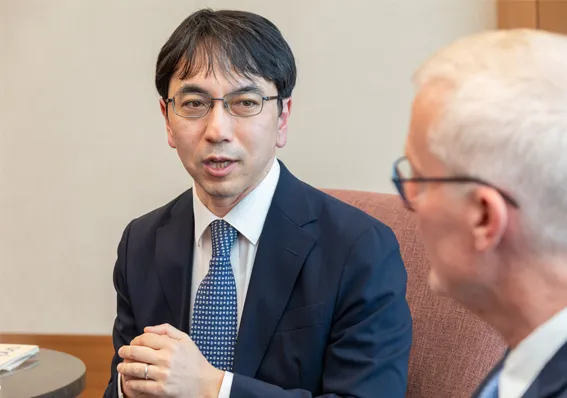
That is precisely why I believe it is important for meetings and dialogue to take place in person, rather than online.
It is also more difficult to discern in an online setting whether someone is holding back from speaking out of hesitation.
Exactly. I believe it is ultimately the responsibility of leadership to lower the barriers to speaking up.
I would now like to turn to you, Ms. Kanayama. Earlier, you mentioned that having a strong commercial mindset is particularly important for the Legal Unit. From the perspective of the Legal Unit, do you feel that INPEX is an organization that is receptive to what might be described as "healthy conflict"?
Our Company is home to numerous employees with diverse professional backgrounds, including geologists, geophysicists and individuals who previously worked at audit firms. Perhaps because of this diversity, I sense that there has long been a strong culture of respecting the views and expertise of specialists.
Many of our projects are both long-term and large in scale, and they involve a wide range of functions across the organization. Success cannot be achieved by any single department taking the spotlight. Rather, it requires close collaboration and teamwork among all stakeholders, including Legal, technical functions and commercial teams. I believe this emphasis on cross-functional collaboration is embedded in INPEX's corporate culture.


So, in other words, engineers, commercial teams and the Legal Unit all respect one another's roles and expertise.
Yes, that is correct. While there are, of course, occasions when opinions differ, I feel that through thorough discussion, our legal advice is respected.
In addition, given that many of our projects span several decades, I sense that the Company's management approaches legal risks from a long-term perspective rather than a short-term or narrowly focused one, and carefully considers the significance and potential impact of those risks. In that sense, I believe there is also a solid foundation within management for engaging in healthy and constructive debate.
When addressing project-related issues, I imagine that a variety of views and options are raised even within the Legal Unit. At the same time, it is necessary to ultimately converge toward a certain pathway. How do you manage and reconcile differing opinions to reach a unified course of action?
Those working most closely on each individual project naturally have the best understanding of its specific circumstances. For that reason, rather than imposing views in a one-sided manner, we make a conscious effort to first listen carefully to the perspectives of the members involved and to engage in discussions together without preconceived notions.
Even though team members come from different backgrounds, the Legal Unit shares a common foundation of legal thinking and a common language in the law. As a result, our perspectives rarely diverge in fundamental ways. Through concerted discussion built on this shared foundation, I believe we are ultimately able to arrive at conclusions that everyone can accept and feel a sense of alignment with.
Within the Legal Unit, you share a common legal reasoning. However, when working closely with other departments, each with different areas of expertise, it seems that there may not always be a shared common language. In such situations, how do you approach communication with colleagues in other functions?
For example, when discussing legal matters that are highly technical, we make a conscious effort to explain them through concrete examples and to break them down in a clear and accessible way. In addition, I believe it is essential to engage in discussions with patience and care, ensuring that sufficient time is taken to reach a mutual understanding.
So, it is about engaging in dialogue with one another and gaining an understanding of perspectives and knowledge that we may not already have.
Absolutely. Technical fields are not always areas in which I have immediate expertise, but by continuing to ask questions and engage in discussion, I can steadily deepen my understanding.
I have a relative who is an engineer, and I have had opportunities to clearly recognize the differences in how we view and think about things. On one occasion, I took him to Tōdai-ji Temple. While I had always viewed the Great Buddha primarily from an aesthetic perspective, he was deeply interested in how it was built and in its structural design.
That contrast in perspectives was a valuable learning experience for me and clearly demonstrated how differently the same subject can be perceived depending on one's background and expertise.
To summarize our discussion so far, it seems fair to say that making diversity truly effective requires strong listening skills, leadership and a culture of mutual respect.
I would add to that the importance of empathy. It is something we can easily overlook, but the ability to view issues from another person's perspective is essential when engaging in meaningful discussion.
Expectations for INPEX over the next ten years
Finally, I would like to ask both of you to share your thoughts on the future of INPEX. As I mentioned at the beginning, looking toward 2035, I would appreciate hearing your perspectives on what you believe will be most important for the Company to continue to grow and evolve over the next decade.
Perhaps it is the willingness to question the assumptions we have long made and the things we have taken for granted. In times of profound change, I believe it is essential to continuously ask ourselves questions and to challenge our own thinking.
Over the past year, we have seen that many of the things that we once took for granted no longer hold true. In such circumstances, it is essential to always be questioning whether change is occurring, and whether we are at a turning point.
Indeed, I believe that applies not only to organizations, but also to each of us at an individual level, including how we think about and shape our own careers.
While this may partly reflect the nature of our industry, the number of female managers, albeit on the increase, is still relatively limited. That said, INPEX provides a supportive and inclusive working environment, with parental leave available to both men and women. In addition, work style flexibility has improved through the introduction of systems such as flexible and remote working arrangements, particularly before and after COVID. There is also greater understanding and support within the workplace for employees raising children.
Personally, thanks to this flexible working environment, I have been able to take on an overseas assignment while raising a preschool-age child, and to balance my responsibilities as a manager with childcare.
While it may be challenging for the Company to rapidly increase the number of female managers in the short term, I am hopeful that we will see continued growth in this respect over the medium to long term.
Among companies in Australia involved in mineral and resources development, there are organizations where women now account for as much as 33 percent of the workforce, and where a significant number of women serve on boards and in senior leadership positions. These companies did not arrive at that point overnight—they have undergone substantial change over the past 15 years.
There is no reason why INPEX cannot follow a similar path.
I believe that many of the necessary policies are now in place. Going forward, what will be increasingly important is fostering a culture in which employees can make full use of these policies and balance their careers with family responsibilities.
So, when we consider what DE&I means in the context of corporate growth, it seems to encompass the importance of listening, respecting others and cultivating empathy. Also, it is not about leadership being confined to a select few, but rather about everyone exercising their own form of leadership within the organization.
By being aware of these considerations and reflecting them in our daily actions, we can foster an organizational culture that naturally enables the Company to move forward from multiple perspectives and standpoints—ultimately contributing to sustainable corporate growth. Would that be a fair way to summarize our discussion?
Exactly. Otherwise, DE&I risks becoming merely a buzzword and fails to function as a truly win-win concept for both employees and the organization.
Through today's discussion, we have gained valuable insights into where the Company stands when viewed through the lens of DE&I, as well as important perspectives to guide us toward 2035. Drawing on these insights, we will continue to move forward with determination to achieve INPEX Vision 2035.
Mr. Miller and Ms. Kanayama, thank you very much for joining us today.
Related Page
-
Message from the Officer in Charge
-
Human Capital>Key Initiatives to Make INPEX the Employer of Choice
-
Progress of Action Plans for each Materiality
-
Feature 2: Biodiversity Conservation Initiatives in Japan