
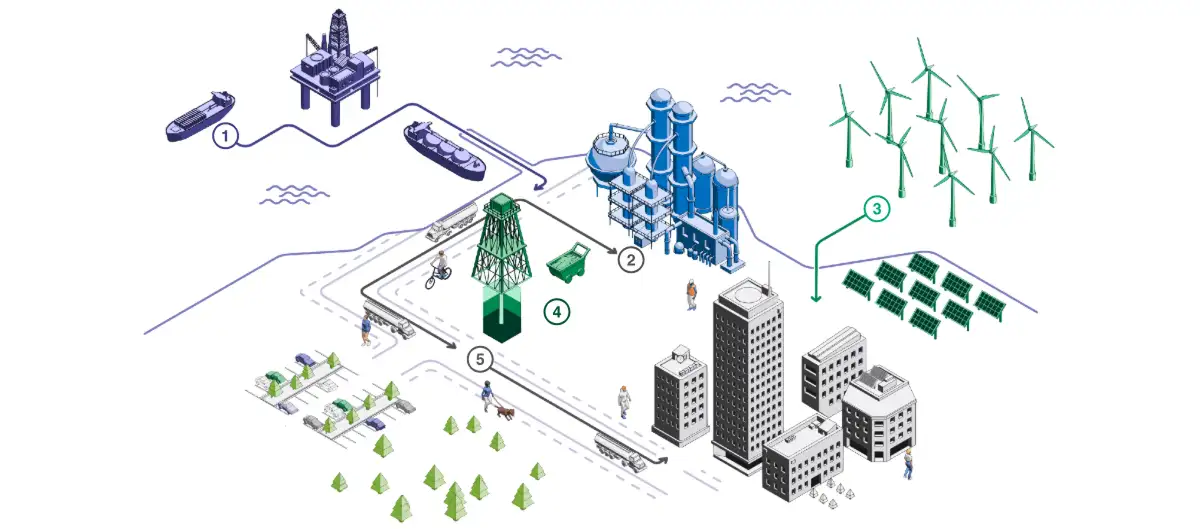
- ① Oil and natural gas business
- ② Lower-carbon business (CCS, hydrogen)
- ③ Power-related business
- ④ Extraction of subsurface resources other than oil and natural gas
- ⑤ Transportation and sales
① Oil and natural gas business
Key Stakeholders
- Countries of operation
- Project partners
- Contractors, suppliers
- Local communities, indigenous peoples
- NGOs/NPOs
- Employees
Key Sustainability Activities
- Environmental and social impact assessment, acquisition of environmental approval
- Consideration of safety and potential impacts on the environment and society in business operations
- Communication with stakeholders in local communities, briefings for residents (as needed)
- Fair and impartial procurement of materials and equipment
- Local employment
- Respect for human rights
- Use of clean energy
- Management of GHG emissions
- Management of occupational health and safety for all employees and contractors
② Lower-carbon business (CCS, hydrogen)
Key Stakeholders
- Countries of operation
- Project partners
- Contractors, suppliers
- Local communities, indigenous peoples
- NGOs/NPOs
- Employees
Key Sustainability Activities
- Environmental and social impact assessment, acquisition of environmental approval
- Consideration of safety and potential impacts on the environment and society in business operations
- Communication with stakeholders in local communities, briefings for residents (as needed)
- Fair and impartial procurement of materials and equipment
- Local employment
- Respect for human rights
- Use of clean energy
- Reduction of GHG emissions through CCS
- Management of occupational health and safety for all employees and contractors
③ Power-related business
Key Stakeholders
- Countries of operation
- Project partners
- Contractors, suppliers
- Local communities, indigenous peoples
- NGOs/NPOs
- Employees
Key Sustainability Activities
- Environmental and social impact assessment, acquisition of environmental approval
- Consideration of safety and potential impacts on the environment and society in business operations
- Communication with stakeholders in local communities, briefings for residents (as needed)
- Fair and impartial procurement of materials and equipment
- Local employment
- Respect for human rights
- Use of clean energy
- Management of GHG emissions
- Management of occupational health and safety for all employees and contractors
④ Extraction of subsurface resources other than oil and natural gas
Key Stakeholders
- Countries of operation
- Project partners
- Contractors, suppliers
- Local communities, indigenous peoples
- NGOs/NPOs
- Employees
Key Sustainability Activities
- Environmental and social impact assessment, acquisition of environmental approval
- Consideration of safety and potential impacts on the environment and society in business operations
- Communication with stakeholders in local communities, briefings for residents (as needed)
- Fair and impartial procurement of materials and equipment
- Local employment
- Respect for human rights
- Use of clean energy
- Management of GHG emissions
- Management of occupational health and safety for all employees and contractors
⑤ Transportation and sales
Key Stakeholders
- Contractors
- Local communities
- NGOs/NPOs
- Customers
- Employees
Key Sustainability Activities
- Stable and efficient supply of energy
- Management of product quality and safety
- Management of safety and consideration of potential impacts on the environment and society in the transportation phase
- Dialogue with customers and consumers
- Use of clean energy
- Management of GHG emissions
- Management of occupational health and safety for all employees and contractors