
Identification of Biodiversity-related Dependencies, Impacts, Risks, and Opportunities
Please refer to TNFD-related Initiatives for details.
Avoidance and Mitigation of, and Compensation for, Impacts to Protected Areas
INPEX has made a commitment in our Policy and Commitments on Biodiversity Conservation to "not operate our businesses inside UNESCO World Natural Heritage site boundaries." We have confirmed that, as of December 31, 2025, none of our operator projects are operating in areas that we have defined as exclusion zones.
Furthermore, since FY2019, we have been enhancing our geographic information system (GIS) with information on protected areas obtained from the World Database on Protected Areas (WDPA)*1, and information on animal and plant species that fall under the International Union for Conservation of Nature (IUCN) Red List categories, for the purposes as detailed below.
- Confirmation of whether our operator projects operate in any protected areas
- Initial screening of potential impacts of new projects on protected areas
- Planning of biodiversity conservation activities in existing projects
-
*1Database of protected areas developed by the United Nations Environment Programme (UNEP) and IUCN
Promotion of a Net Positive Approach
To better understand the present situation of our nature-related efforts and identify further necessary actions, we have utilized the World Business Council for Sustainable Development (WBCSD) practitioner's guide: "What does nature-positive mean for business?" published by the WBCSD for practitioners in 2021. In accordance with the WBCSD guidance, we identified that areas in which we are making particular progress are the development and disclosure of biodiversity and water commitments, and efforts to avoid, mitigate, and compensate for the impacts on biodiversity based on the mitigation hierarchy. In the future, we will consider nature-related impacts and dependencies in terms of the value chain and implement initiatives that contribute to net positive impacts.
Promotion of Biodiversity Conservation Activities
The type and degree of the impacts that our business activities have on biodiversity differ depending on the scale, activities, and location of each project. Accordingly, the biodiversity conservation efforts required for each project also differ. Therefore, we assess the materiality of biodiversity in the areas in which we operate, and the risks and impacts on biodiversity that each project brings. For environmentally sensitive areas that are particularly important (protected areas, critical habitats of threatened species, forests, mangroves, coral reefs, wetlands, and tidal flats, etc.), we plan and implement biodiversity conservation actions to avoid, mitigate, and compensate for the risks and impacts of the project, based on the mitigation hierarchy.
For many years, we have been conducting activities that contribute to biodiversity conservation at our sites in Japan and overseas. We will continue to enhance our biodiversity conservation activities across the INPEX Group based on our Policy and Commitments on Biodiversity Conservation established and published in December 2022. In FY2024, to further ensure the fulfillment and advancement of our commitments, we established Group-wide measurable quantitative targets to achieve net zero deforestation in operational organizations starting in FY2025 or later and to implement 100% of planned biodiversity conservation activities. In FY2025, we implemented 90% of our planned biodiversity conservation activities.
Furthermore, to appropriately manage the impacts of our business activities on biodiversity, we conduct biodiversity assessments at all sites of our operator projects. Based on the results, high-risk sites have been identified, and we confirmed that seven sites we operate (92,319.08 hectares) are adjacent to areas important for biodiversity conservation. At these high-risk sites, we have biodiversity management plans and are actively working to mitigate our impacts, conserve habitats, and enhance monitoring, among other efforts.
| Number of Sites | Areas (ha) | |
|---|---|---|
| Operational sites | 47 | 92,419.76 |
| Sites where biodiversity impact assessments are conducted | 47 | 92,419.76 |
| Of the assessed sites, sites in close proximity to areas important for biodiversity | 7 | 92,319.08 |
| Of the sites in close proximity to areas important for biodiversity, sites with biodiversity management plans | 7 | 92,319.08 |
Overseas Efforts to Conserve Biodiversity
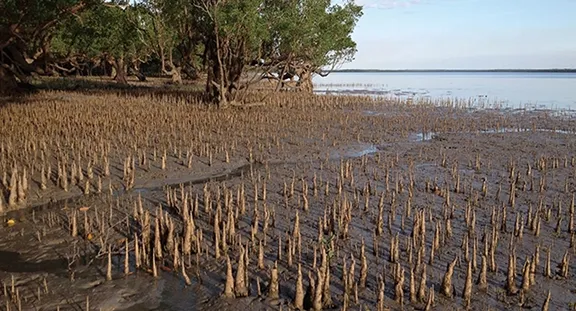
The Ichthys LNG Project's onshore processing plant is located in Darwin Harbour, where extensive mangrove forests along the coast provide breeding and feeding grounds for fish and sea turtles. To protect this rich biodiversity, we have continued to comprehensively monitor wastewater quality, seawater quality, and growing conditions for mangrove forests and other natural vegetation in Darwin Harbour even after the start of project operations. We further contribute to biodiversity conservation around the plant by sponsoring marine research projects such as dugong studies in the Northern Territory.
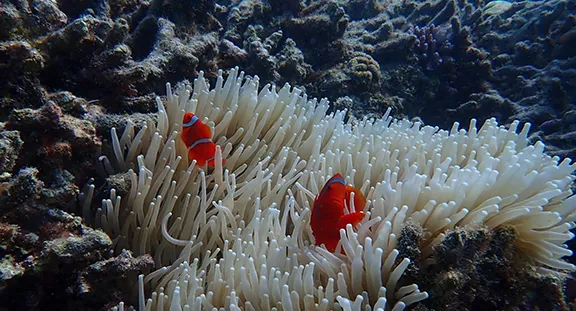
As part of the Environmental and Social Impact Assessment process (AMDAL) for the Abadi LNG Project in Indonesia, we surveyed the distribution of coral reefs in the marine area near the project site using satellite image analysis in FY2021. We also conducted a coral reef survey by diving in the sea in front of the project site in November 2023. Using the results of these surveys, we are conducting an impact assessment and planning to formulate and implement measures to reduce the impacts on coral reefs based on the mitigation hierarchy.
-
Mangroves subject to environmental monitoring program around Darwin Harbour
-
Coral reefs in Indonesia
Efforts to Conserve Biodiversity in Japan
Understanding of Characteristics of Environments around Sites in Japan
In FY2021, we conducted desktop reviews to understand the regional characteristics of environments around sites in Japan (rivers, fishing grounds/farms, forests, biodiversity conservation areas, cultural heritages, natural monuments, critical habitats of threatened species, etc.). We then compiled this information using our GIS. This enabled us to understand the ecosystems around our sites, and also to understand environmentally sensitive areas around sites at the planning stage of new projects. The results of these reviews are also used to identify and assess—following the LEAP approach of the Taskforce on Nature-related Financial Disclosures (TNFD) framework—the natural capital on which our sites depend or have impacts. Please refer to TNFD-related Initiatives for details.
Efforts for the Tokyo Bay UMI Project
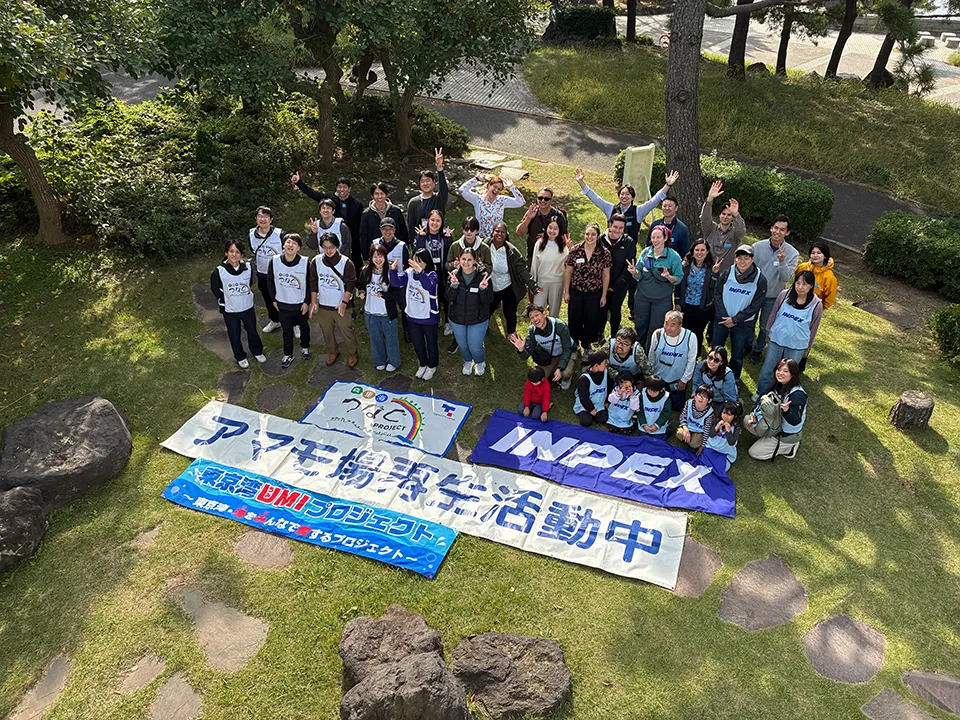
In FY2024, we started participating in the Tokyo Bay UMI Project, an environmental conservation initiative aimed at restoring and maintaining the rich natural environment of Tokyo Bay. This project aims to sustain biodiversity by restoring eelgrass beds in Tokyo Bay and to increase public awareness and understanding of the sea through its activities. The project is carried out through public-private collaboration among the Ministry of Land, Infrastructure, Transport and Tourism (MLIT), local governments, private companies, and NPOs.
In FY2025, we participated in an activity in which eelgrass seeds selected in the summer were mixed with sand and mulch, packed into biodegradable non-woven fabric packages, and handed to authorized divers to be laid on the seabed. Our employees and their families took part in this activity. All participants, including small children and adults, listened intently to a lecture on seed-planting by the Association for Shore Environment Creation, an NPO that runs the event, and enjoyed selecting and packaging the eelgrass seeds. The seeds planted on this occasion are expected to sprout on the sea floor and bloom next spring.
There are also regular opportunities for MLIT, local governments, NPOs, and private companies participating in the project to exchange opinions and engage in dialogue on efforts to restore biodiversity and reduce biodiversity loss through the project.
Conservation of Loggerhead Sea Turtles of Tanegashima Island
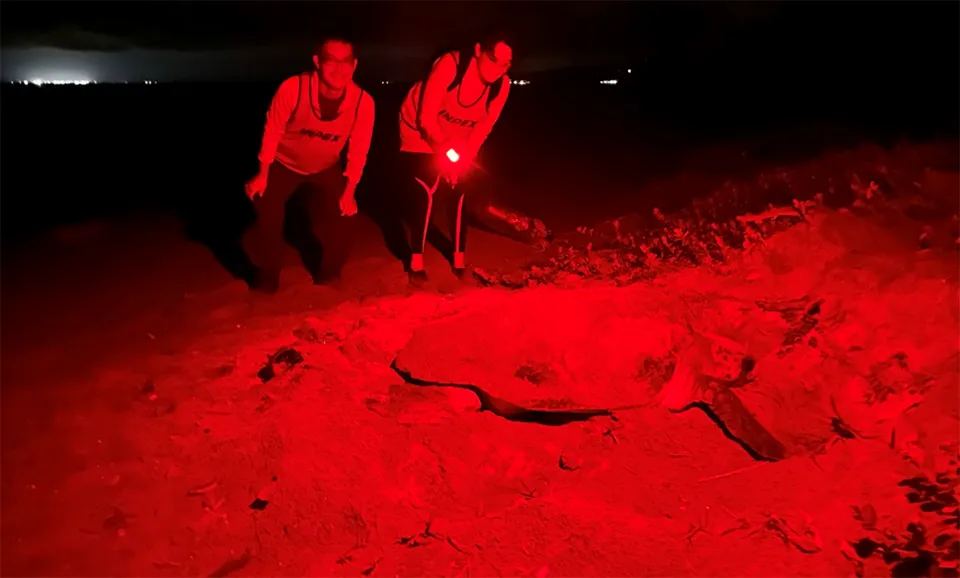
In FY2025, we started supporting a program of Earthwatch Japan, an approved corporation engaging in specified non-profit activities. This project offers assistance to research activities being conducted at Tanegashima Island, a nesting ground of the endangered loggerhead sea turtle. Nighttime surveys are carried out on the nesting grounds, and tags are used to identify each spawning individual. GPS Argos transmitters are then attached to females after spawning to track them via satellite.
The volunteer activity conducted last June had a total of approximately 100 participants, including our employees and members of the public. They learned on-site about the diverse ties in nature and the relationship between nature and people, and shared the experiences gained there with many others.
We will continue to support opportunities to learn about marine conservation and foster environmental awareness by participating in activities that shed light on the ecology of loggerhead sea turtles.
Efforts at Kitsunedaira Donguri-no-mori
As part of the Niigata Prefecture's Forest Management Support Program ongoing since FY2010, we have been conducting the Kitsunedaira Donguri-no-mori (Acorn Forest) Project in the Fudosawa district of Nagaoka City, adjacent to the Nagaoka Field Office, in collaboration with the local residents. In addition to forest management activities, since FY2019, we have been conducting biodiversity surveys in Kitsunedaira Donguri-no-mori and continuous monitoring. Please refer to Feature 2: Biodiversity Conservation Initiatives in Japan for details on the forest management activities and biodiversity surveys.
Measurement of Impacts on Biodiversity from Forest Management Activities
- Understanding of the potential of Kitsunedaira Donguri-no-mori through wide-area assessments
Prior to conducting impact assessments on biodiversity, we conducted a wide-area assessment of Kitsunedaira Donguri-no-mori to understand the characteristics of the area's biodiversity. We used "materiality of biodiversity," which indicates the conservation value of the biodiversity of the target area, and "ecosystem integrity (degree of development)," which represents the naturalness (degree of development) of the ecosystem, as assessment metrics. We combined these two metrics to relatively assess the potential conservation materiality and the current state of the remaining natural environment.
The results of the wide-area assessment confirmed that Kitsunedaira Donguri-no-mori is located in a satoyama environment—a woodland area near a rural community—affected by human activity, and that there are riverside valleys and plains with high materiality of biodiversity in its vicinity. While such satoyama environments are common in Japan, their distribution is limited within Niigata Prefecture, making this a rare environment within the prefecture. Furthermore, the area is located in an ecotone (a transition zone between different ecosystems) where multiple environments such as mountains, valleys, plains, and rivers meet, suggesting that it may play a central role in connecting the surrounding ecosystems.
In addition, the area around Kitsunedaira Donguri-no-mori tends to have a particularly high number of aquatic species, including amphibians and freshwater fish, as well as a high number of rare species, and forest conservation is considered important for amphibians that move between aquatic and terrestrial environments.
The above results show that Kitsunedaira Donguri-no-mori is a rare satoyama environment in Niigata Prefecture and is assessed as an important area for biodiversity conservation due to its location in an ecotone where multiple ecosystems meet.
- Visualization of forest conservation effects through scenario analysis
Kitsunedaira Donguri-no-mori was once used as farmland, but has since been left unused and has evolved into an open area without trees. Taking into account this land use history, we conducted a comparative analysis of four scenarios reflecting different management policies to assess the impacts of continued forest conservation on biodiversity. Specifically, we quantified the changes due to management policies using two metrics: the number of plant species within a 20-meter grid; and the total number of species in the forest, calculated from the differences in species composition between grids.
| Scenarios | Conditions |
|---|---|
| Continuous management scenario | Current management (pruning and maintenance of partial grasslands) continues from FY2025 onward. |
| No project scenario | Forest management activities were not carried out at Kitsunedaira Donguri-no-mori, with the area being left as it was since 2010. |
| Project abandonment scenario | Management ceases from FY2025 onward and the area is left as it is. |
| Biodiversity maximization scenario | Biodiversity of the forest as a whole is maximized by creating diverse habitats (weed colonies, Japanese pampas grass colonies, and early to old forests) from FY2025 onward. |
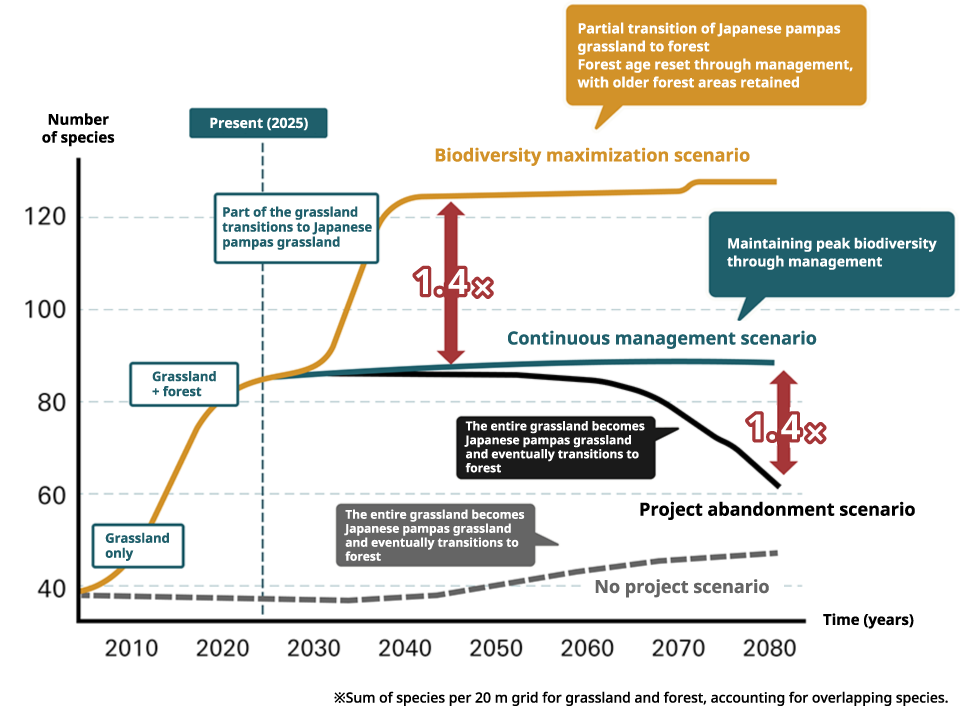
In the no-project scenario, it is assumed that the vegetation will transition from farmland weed colonies to Japanese pampas grasslands and then to forest over approximately 50 years. Compared to the current situation in 2020 (continuous management scenario), species richness in the forest is expected to be only about half, which suggests that the number of plant species would have decreased significantly if forest management (including grassland maintenance) had not been undertaken.
Meanwhile, in the project abandonment scenario, it is assumed that grasslands, currently maintained by mowing, will eventually become forests. As a result, habitats for plants that prefer open environments will be lost, suggesting a significant decrease in species richness over a long-term timescale of several decades.
In contrast, the biodiversity maximization scenario assumes a state where diverse habitats are ensured by systematically creating and maintaining grasslands and forests at different stages of transition. This suggests that the total number of plant species in the forest would be 1.4 times or more the level under the continuous management scenario.
Similar scenario analyses were also conducted for vertebrates and insects. The results show that the response to management measures differs depending on the taxonomic group. For example, the contribution of past forest management was significant for mammals and amphibians, and a decrease in species richness was found in the no-project and project abandonment scenarios. This suggests that habitat diversification has a significant effect. For birds and reptiles, the maintenance of grasslands makes a significant contribution, and a certain level of species richness can be maintained even in the project abandonment scenario for the time being. Therefore, the effect of habitat diversification is smaller compared to mammals and amphibians, but it was found that forest management has a certain effect on maintaining species richness compared to the no-project scenario. On the other hand, a negative correlation was observed between dragonfly species richness and the growth of grasslands and forests, suggesting that existing efforts focusing only on forests and grasslands may not be sufficient for conservation. Therefore, it is necessary to consider additional management options, such as the conservation and creation of waterside environments.
These analyses show that overall biodiversity can be enhanced by appropriately continuing the current management while intentionally diversifying habitats. Meanwhile, the creation and conservation of waterside environments beyond the scope of forest management are effective for aquatic and riparian species (especially dragonflies).
Going forward, taking into account the results of the wide-area assessment and scenario analyses, we will appropriately continue the current management (such as pruning, undergrowth management, and maintenance of partial grasslands), and at the same time, study and implement—in stages—forest management measures that have positive impacts on more species.
Related Page
-
Biodiversity Conservation and Environmental Pollution Measures>Appropriate Waste Disposal and Development of a Circular Economy
-
Feature 2: Biodiversity Conservation Initiatives in Japan
-
Biodiversity Conservation and Environmental Pollution Measures>TNFD-related Initiatives
-
Biodiversity Conservation and Environmental Pollution Measures>Water Resource Management